An Interview with Amanda Healy, Founder of Kirrikin

Amanda Healy
A passionate and determined advocate for indigenous culture, wears many hats. Her impressive career history is not just a series of jobs; it's a mission. With deep roots in her Wonnarua ancestry and over 35 years of experience in the mining industry, Amanda ventured into a new realm in 2014, creating the Kirrikin fashion brand. Kirrikin marries luxurious Australian art with fashion, embodying exclusive design, sustainability, and a noble cause close to Amanda's heart. We had the privilege of sitting down with her to learn more about the intersection of art and fashion in the world of Kirrikin.

Where Indigenous Art Meets Contemporary Fashion
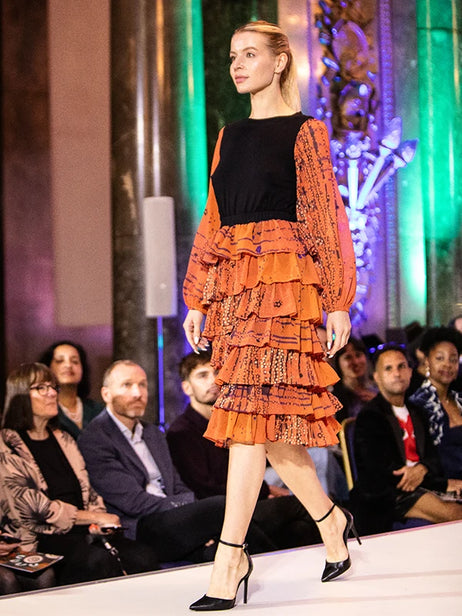
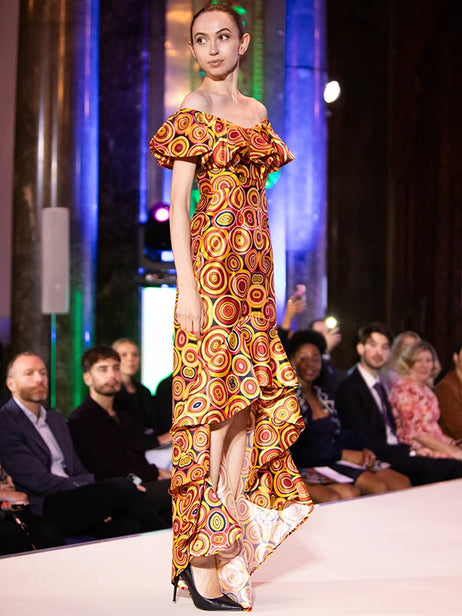
Kirrikin's collections are a fusion of contemporary Australian Aboriginal art and modern fashion. Using digital technology to print artwork on garments, as well as crafting exquisite cashmere scarves and silk ties, the brand transforms indigenous art into wearable, sustainable pieces. Each creation narrates a story, encapsulating the artists' rich traditions, cultural roots, and profound connection to their land and nature. The result is a burst of vibrant colors and unique patterns brought to life on eco-friendly fabrics.
Kirrikin is rapidly gaining popularity not only in Australia but also across the United States and Europe. In September, the brand showcased its creations at the First Nation Fashion Show at Australia House in London, followed by a presentation on the catwalk of Melbourne Fashion Week on October 25.
Amanda Healy even took a trip to Budapest in September to promote cultural diversity and explore the Hungarian fashion world. During her visit, she engaged with representatives from the Moholy-Nagy University of Art and Design, WAMP Design Fair, and even had the opportunity to visit Romani Design's studio, where she shared experiences with the brand's co-founder, art manager, and curator, Erika Varga.
An Interview with Amanda Healy, Founder of Kirrikin
I 100% agree of the broad impact of fashion, we all interact with it every day, weather we like it or not! Clothing has the power to show who you are, what you believe in, how you think about the world you live in, it is powerful. Sadly too many Governments do not give it the support it deserves, it has a huge impact on our economies, and our wellbeing. Kirrikin represent the ancient stories of our people (the Indigenous people of Australia) how we interact with our country, how we manage our environment to ensure plenty for our future generations, how we belong to the the Country, the Country does not belong to us. We are the oldest living culture on earth, we have lived on our continent for over 60,000 years in peace and harmony for that time. We were colonised by the British just over 200 years ago, and have suffered displacement, exclusion, limitation, division and restrictions since that time, we need to reclaim our space, and do that in a positive way – there is no going back, so one of the ways of doing that is through fashion.
I was inspired to start Kirrikin due to noticing no authentic representation in our retail market for authentic Indigenous production, they were all made overseas, and much ‘in the style of’ used in explaining them. I want our REAL people to be seen and heard.
The word Kirrikin was part of the original language of Aboriginal Australians – which means "Sunday's best clothes". According to Hungarian folk traditions, the most beautiful Sunday dress was clean, church-going attire, and for the poorer stratum it was usually the only celebratory dress. How do we imagine the best Sunday clothes for the natives?
In our historical context the words were more aligned to ceremonial robes made from possum skins, but in more recent times our people were ‘given’ religion to ‘civilise’ us. So it became a term to explain getting dress up and putting on your best clothes, our languages were outlawed, so this was Annice way to keep it alive, through common usage in things like this, after all how could they complain about us wanting to get dressed to go to their churches?
We are a social enterprise, 80% of our profits go to the participating artists, they are paid a % of all sales. We also support women’s programs such as single mums needing support for food, accommodation etc.
I have a couple of different approaches, and some of the artists have worked with me since day 1, others are new and up and coming. Artists come to me to work with me these days, but it has not always been the case. I had to work hard to get them on board in the first place!
You used to work in mining, which is a long way from fashion and art, so I think you have faced a lot of challenges, if only because it is a social enterprise. What challenges did you face during the launch of Kirrikin?
Interestingly the work I do in mining is in the fabrication field, it is very similar – you do a design, you create a pattern, you test it out, and check that everything fits where it should, and then you fit it (or make it for sale) – the only difference is the tools you use, and the fabric you choose to work with. It is a project management methodology in the end, which is transferable! Just mining tends to be a bit less attractive in the end!
We have grown a lot over the years, and have recently developed a evening wear line, which I am loving. I think I will play in that area a bit more – the glamorous gowns are too gorgeous and difficult to turn you back on.
I always have favourites from each collection, and it changes every year – this year I am loving our Yonga dress – this is the local name for Kangaroos in Perth Western Australia where I live now. My most sold products though are our scarves, particularly in silk chiffon, they are sold all over the world, telling the stories of my people.
I take regular visits to India where our products are made, we make some in Australia, but we have limited manufacturing of these products at home now, so we mostly manufacture overseas. I check they have no child labour, they emply people on good wages, and we are working on figuring out traceability in our products right now. It is a challenge to find transparency in production, but I think it will become easier in the coming years, as we get less tolerant of cheap products.
The artwork itself is a labour of love and healing for my artists usually, due to the brutal left overs of Colonization we often find families are left with traumatic responses, so art helps in the healing process. So whilst some art may take longer than others it is definitely worth doing for them.
This is a constant challenge to find the right path, and make sure you stay on it, though I always believe that if your heart is true, then you will find the path that does what you need to achieve.
I would say Please do it!! The more change we can make in the world the better, we need to take care of our people and our planet not our profits!
Questions by: Kiss Krisztina/fashion magazine Retikül.hu.
Featured Images: Jenny Magee/First Nation Fashion Show/Krirrikin.
Image gallery images: Jenny Magee/Krirrikin.
Thanks for the organization: Australian Embassy and Permanent Mission to the United Nations, Vienna.